Marginal Notes 19: What's in a name?

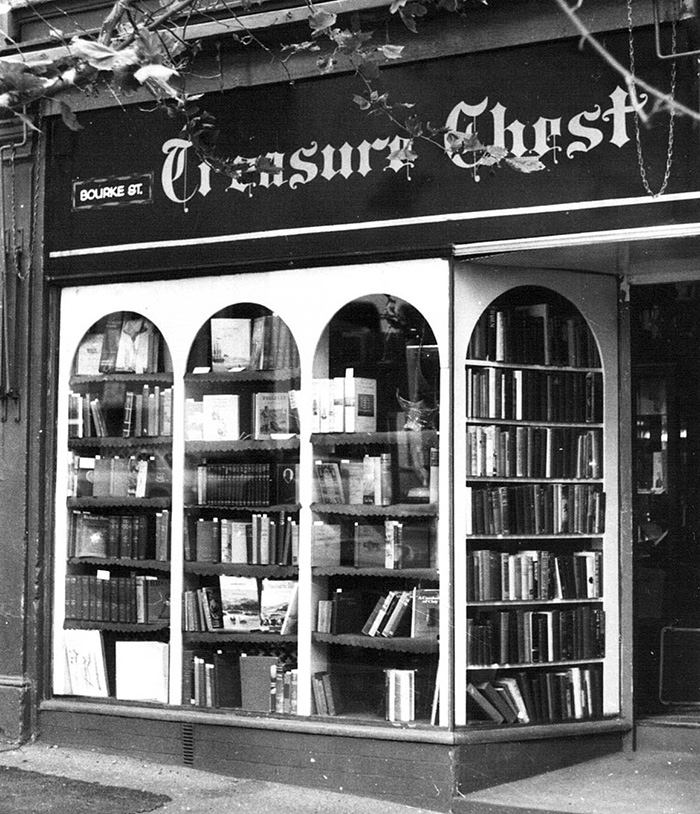
Naming a business is an interesting exercise, often dependent upon such aspects as timing, location, competition, ego and/or the whim of the business owner. When planning the opening of our shop in Essendon, my parents and I would have thought it the height of vanity to use our own name. In Melbourne in 1965, if one mentioned old or rare books the names Gaston Renard, Kenneth Hince, H. A. Evans & Son, Hall’s Bookstore, and N. H. Seward sprang to mind. In the same year, if one mentioned the name Craddock it was associated with the pop singer Billy Crash Craddock. Catchy names were fashionable for shops and, inspired by a large Saratoga trunk filled with an assortment of stock that was a feature of the shop, we decided on The Essendon Treasure Chest. When we opened our first Melbourne CBD premises this became Bourke Street Bookshop.
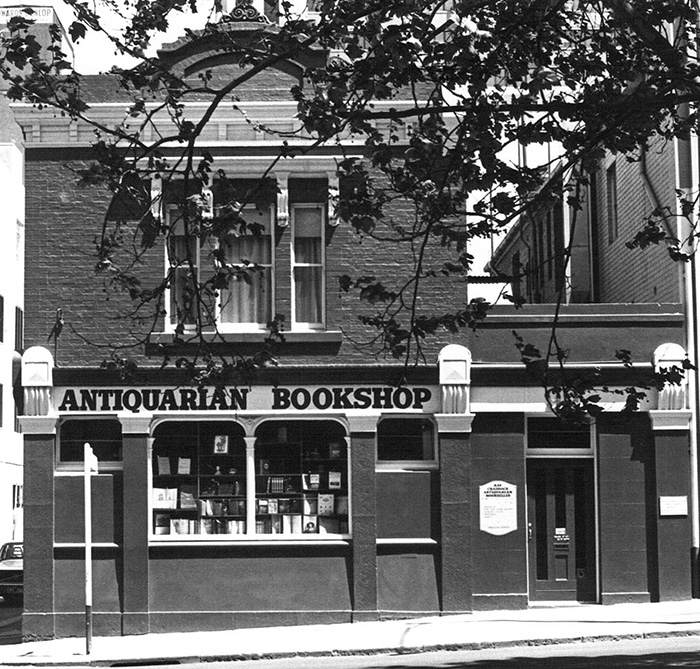
In 1976, when we moved to new premises at 99 King Street, Melbourne, two choices of names were to have a large bearing on our continuing success. The first was the decision to use our own name for the business. I felt that we should become M. and K. Craddock but Muriel, in her wisdom, insisted that we use my name alone, believing it was better for my long-term career, as it would give me individual recognition as a bookseller. We became Kay Craddock – Antiquarian Bookseller Pty. Ltd. At this stage the use of the hyphen, or dash, was important to me. As a teenager, I had enjoyed a series of young-adult books featuring the nurse Sue Barton. Each title had her name, then a dash followed by the stages in her career: for example Sue Barton–Student Nurse. I had no desire to become a nurse, but I had a latent desire to become dash something.
The second decision was what to put on the facia of our new premises. By this time we were well accepted in the community as respectable secondhand booksellers (the distinction being necessary as the public perception was such that not all secondhand booksellers were considered respectable). Muriel and I decided to have Antiquarian Bookshop on the facia, with our new business name displayed on a sign by the front door. At the official opening of the shop, a colleague asked me why I had missed the opportunity to have my name on the building. My answer was simple. If we wanted to be known as antiquarian booksellers, we first had to make the term antiquarian bookseller recognisable within Melbourne’s community. Perhaps subconsciously we wanted to make the term synonymous with my name. To a degree, we have succeeded in this.