Marginal Notes 52 — Penny Plain and Twopence Coloured

Marginal Notes 52 — Penny Plain and Twopence Coloured*
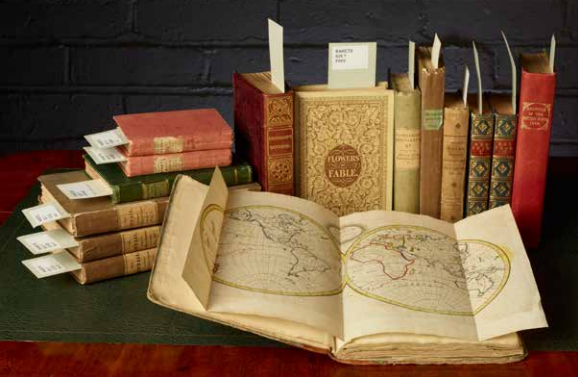
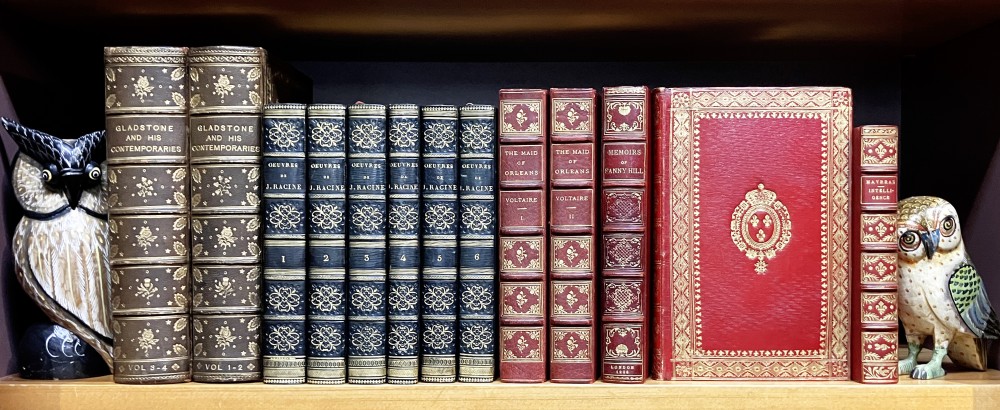
We have recently had the pleasure of purchasing a large library of 18th and 19th century books, the majority of which are in beautiful leather bindings. These bindings, apart from protecting the contents, add a tangible level of enjoyment to the combination of author and text, typography and paper, information and reading – the appreciation of the beauty of the design, the craftsmanship, the gilt-tooling, the feel of the leather as you (carefully) caress it, and the bibliosmia**:
By way of contrast to this purchase, I am reminded of a call we received in 2010 from a Melbourne couple who had inherited a collection of books from their family in Tasmania. The library had been formed by Thomas Scott (1800-1855), who arrived in Hobart Town from England in 1820. Thomas Scott was a kinsman of the author, Sir Walter Scott, and is said to have named the Tasmanian town of Deloraine after Sir William Deloraine, a character in his famous relative's narrative poem, The Lay of the Last Minstrel.
In Tasmania, Scott became the assistant of George William Evans, an English-born explorer, surveyor and artist who was Tasmania’s first deputy surveyor-general. He applied to succeed him as Surveyor General after Evans resigned the post. His application was eventually unsuccessful, due in part to his association with Evans, who had been accused of accepting bribes. In 1826 Scott was effectively exonerated by the Executive Council, and reaffirmed as Assistant Surveyor.
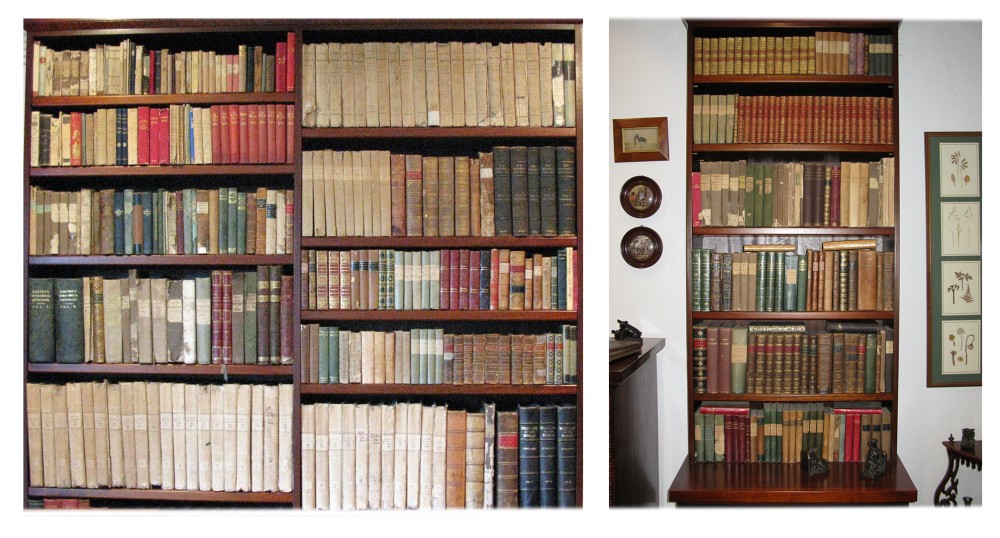
When I first saw the books there was an initial feeling of disappointment that they looked, on the whole, to be dull and unprepossessing. This fleeting reaction was quickly changed to one of growing excitement — the copies looked dull because they were in their original plain paper boards, as originally published and before they had reached a ‘gentleman’s library’ where they would be uniformly bound in leather, aimed to preserve and impress.
It is rare as a bookseller to place whole collections with new owners, so it was a joy to sell the Thomas Scott Collection to the State Library Victoria in 2011. The following is an extract from an article about the collection, written by Jan McDonald and published in The La Trobe Journal No. 100 September 2017:
'Scott’s library consists of about 700 volumes and 400 separate titles published between 1747 and the mid-20th century, and includes numerous works relating to Scott’s profession as a surveyor. There are works on particular subjects of interest, such as Scotland and the Napoleonic wars; books presumably acquired for his children; and many literary works, including by Anthony Trollope, Walter Scott, Percy Bysshe Shelley, George (Lord) Byron and others. There are also numerous works of a humorous nature, with an emphasis on English caricaturist George Cruikshank, as well as books on card games and reference works. The highlights of Scott’s library include an almost complete set of the original Edinburgh Encyclopaedia, published from 1808 to 1830, in an original binding; four works by noted engraver and publisher Rudolph Ackermann on mechanical drawing and related technical subjects, given to Scott by George Evans, the deputy surveyor-general of Van Diemen’s Land; and a 1747 set of Shakespeare’s plays, that include space for annotations for performance . . . The great strength of the collection is that it is an almost complete library assembled for family use, not a collection on a particular theme or interest. Such libraries are rare, and they are important to the history of the book and book collections in Australia, and to those interested in family reading habits in colonial Australia.'
Over the decades, we have found some interesting items placed within the pages of books. When collating the books in the Scott collection, Alison and I were initially horrified and then completely fascinated by the item Jan McDonald describes in her article:
'But perhaps most striking is an item hidden in an 1842 copy of An Atlas of Modern Geography, which belonged to Thomas’s son George: glued to the inside cover is the skin of a mouse, species unidentified.'
* Penny Plain and Twopence Coloured: "A penny plain and twopence coloured" is a famous 19th-century English phrase that originally described the pricing of printed sheets for toy theatres, where unpainted character and scenery sheets cost one penny, while hand-colored versions cost two pence.
** Bibliosmia (n) The smell and aroma of a good book. The effect the book has on the nostrils as you breathe in the scent of the pages. [Shan Williams, Word of the Day, December 15, 2015]. Originally attributed to Oliver Tearle.